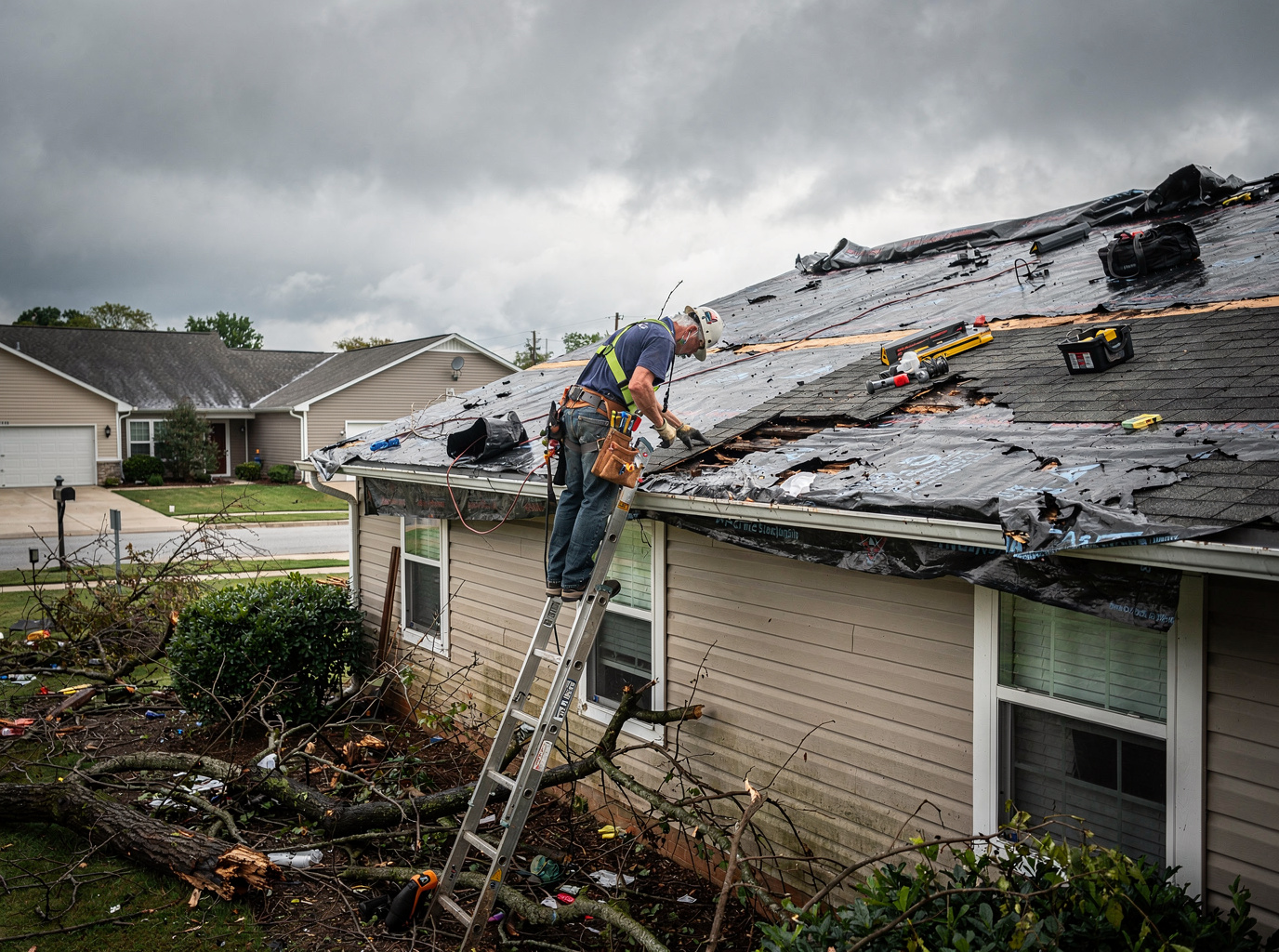
Greenville County sees frequent thunderstorms and occasional hail that hit older roofs hard, especially on the 1960s and 1970s homes common along Augusta Road and in Overbrook. The pros we connect you with inspect for lifted shingles, dented flashing around chimneys, and water entry points that appear days later once humidity rises again. Mild winter rains often mask damage until interior stains show up in West End bungalows or near Falls Park.
Terrain around Liberty Bridge and the Reedy River creates localized wind tunnels that drive rain under ridge vents and into attics on homes in the West End. Pros check attic insulation for saturation and look for rot in sheathing that standard visual checks from the street miss. Nearby cities like Greer and Simpsonville share the same humid subtropical pattern, so crews know to watch for repeated saturation cycles that degrade underlayment faster than in drier regions.
After a storm, the pros we connect you with start with a full roof plane assessment rather than spot fixes, because wind-driven rain often travels under the existing layer on two-story homes near Bon Secours Wellness Arena. They document every affected section with photos for insurance purposes and note any code updates required when replacing sections of decking. This approach prevents callbacks when summer humidity returns and trapped moisture expands.
Homes in Downtown Greenville and along the Augusta Road corridor often have mixed roof ages from prior additions, so damage rarely stops at one plane. The connected pros trace water paths through valleys and step flashing that older installations left vulnerable, then replace only the compromised areas while matching existing materials to keep the rest of the roof intact.
Technician insight
In Greenville, the thing that catches most people out with Storm Damage Roof Repair is how mild winter rains soak into lifted shingles on 1970s homes in Overbrook and then sit under the layer until summer humidity makes the rot obvious weeks later.
West End Hail Follow-Up
A homeowner in the West End noticed interior ceiling spots after a spring storm. The pros we connect you with found hail dents along the south slope plus water trapped under the underlayment near a valley. They replaced the damaged section of decking and restored the flashing tie-in, stopping further intrusion into the attic.
How it works
- 1
Initial Assessment
The pros we connect you with walk the entire roof and attic to locate wind lift, hail dents, and hidden leaks common after Greenville storms.
- 2
Documentation And Scope
They photograph every damaged section and note affected materials so homeowners have clear records for insurance adjusters.
- 3
Targeted Repair
Repairs focus on compromised areas only, replacing underlayment, flashing, and shingles where water entered rather than full replacement.
- 4
Final Walkthrough
A final check confirms no active leaks remain and attic ventilation is restored before crews leave the site.
Pricing
Cost depends on roof size, number of damaged planes, and whether decking replacement is required.